Construction quality is the backbone of every successful project. A small mistake during execution can lead to cracks, leakages, structural failures, costly repairs, and safety risks. That is why every site engineer must perform proper quality checks at every stage of construction.
Whether you are working on residential buildings, commercial towers, or infrastructure projects, maintaining quality ensures durability, safety, and client satisfaction.
In this guide, we will cover the essential quality checks every site engineer should know on construction sites.
1. Excavation Quality Checks
Before starting foundation work, proper excavation inspection is necessary.
Important Checks
- Verify excavation dimensions as per drawing
- Check excavation depth and width
- Ensure no loose soil remains at the bottom
- Confirm proper slope protection
- Remove water accumulation before PCC
- Verify soil bearing capacity
Common Problems
- Over excavation
- Water stagnation
- Loose soil causing settlement
2. PCC (Plain Cement Concrete) Checks
PCC provides a stable base for footing reinforcement.
Quality Checks
- Confirm correct mix ratio
- Check thickness as per drawing
- Ensure proper leveling
- Verify compaction using vibrator
- Surface should be even and crack-free
Engineer Tip
Never allow PCC casting on muddy or waterlogged surfaces.
3. Reinforcement Steel Inspection
Steel reinforcement is one of the most critical structural elements.
Reinforcement Quality Checks
- Verify bar diameter and spacing
- Check lap length
- Ensure proper cover blocks
- Confirm rust-free steel bars
- Check binding wire tightness
- Verify beam-column joint reinforcement
Common Site Mistakes
- Improper cover
- Wrong spacing
- Short lap lengths
- Bent or rusted steel bars
4. Form work & Shuttering Checks
Poor shuttering can affect structural dimensions and concrete quality.
Important Checks
- Alignment and verticality
- Proper supports and bracing
- Leak-proof joints
- Oil application before casting
- Dimensions matching drawings
- Safety of staging materials
Common Defects
- Honeycombing
- Bulging
- Uneven surfaces
- Misalignment
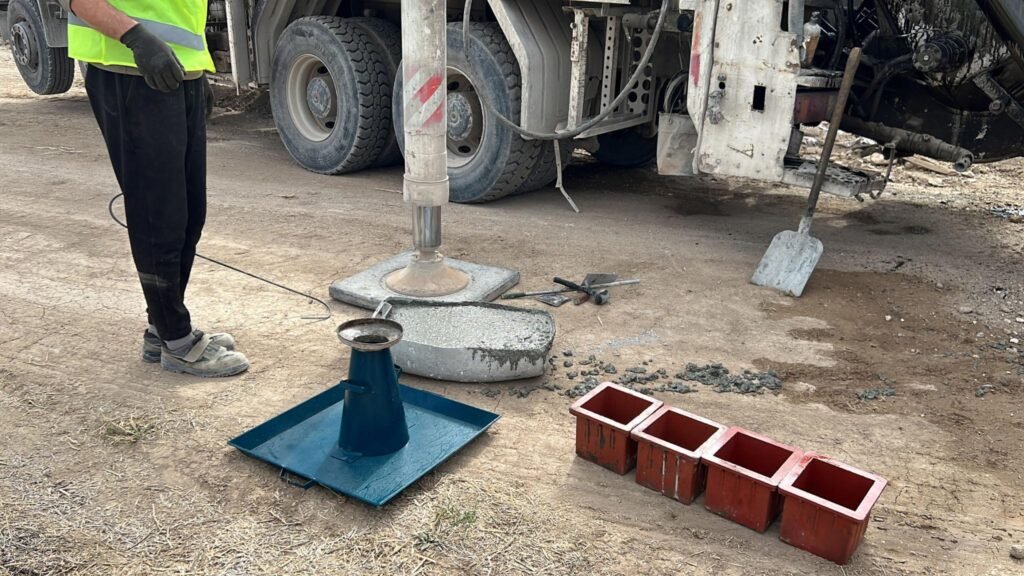
5. Concrete Quality Checks
Concrete quality directly impacts structural strength.
Before Pouring
- Verify approved mix design
- Check slump test results
- Ensure clean form work
- Confirm reinforcement approval
During Pouring
- Proper vibration
- Avoid segregation
- Maintain pouring sequence
- Monitor concrete temperature
After Pouring
- Proper curing
- Surface inspection
- Check for cracks and honeycombing
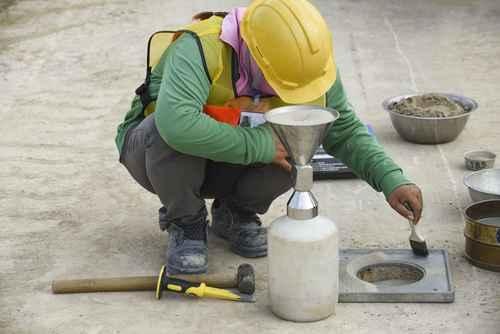
Essential Tests
- Slump test
- Cube test
- Compressive strength test
6. Brickwork Quality Checks
Incorrect masonry work leads to cracks and poor finishing.
Brickwork Inspection Checklist
- Bricks should be soaked before use
- Maintain proper line and level
- Uniform mortar thickness
- Proper joint filling
- Vertical joints should not align
- Check wall plumb using plumb bob
Common Defects
- Uneven joints
- Hollow joints
- Wall deviation
- Cracks
7. Plastering Quality Checks
Good plastering improves durability and aesthetics.
Quality Inspection
- Proper surface preparation
- Correct mortar ratio
- Uniform thickness
- Smooth finishing
- No hollow sound after curing
- Proper curing for minimum 7 days
Common Problems
- Surface cracks
- Debonding
- Uneven finish
8. Waterproofing Inspection
Water leakage is one of the most common building complaints.
Areas to Inspect
- Bathrooms
- Terraces
- Basements
- Water tanks
Quality Checks
- Surface cleaning before application
- Correct waterproofing chemical usage
- Proper slope toward drain
- Ponding test after application
Engineer Tip
Always conduct a 24–48 hour ponding test before tile work.
9. Tile & Flooring Checks
Flooring defects reduce customer satisfaction significantly.
Important Checks
- Level difference between tiles
- Hollow tiles
- Proper alignment
- Joint spacing consistency
- Surface scratches
10. Paint Quality Checks
Painting quality affects final project appearance.
Inspection Checklist
- Surface putty smoothness
- Primer application
- Shade consistency
- No roller marks
- No peeling or bubbling
11. MEP Quality Checks
MEP coordination errors cause major rework issues.
Electrical Checks
- Conduit alignment
- Proper earthing
- Cable quality
Plumbing Checks
- Leakage testing
- Pipe slope verification
- Joint quality
HVAC Checks
- Duct alignment
- Air leakage testing
12. Safety Quality Checks
Safety is also part of quality management.
Mandatory Site Safety Checks
- PPE usage
- Safety barricading
- Scaffolding inspection
- Electrical safety
- Fire extinguishers availability
Importance of QA/QC in Construction
Proper QA/QC practices help:
- Reduce rework costs
- Improve structural safety
- Increase project life
- Improve client satisfaction
- Reduce maintenance issues
- Ensure code compliance
Final Thoughts
A skilled site engineer does more than supervise labor — they ensure construction quality at every stage. Regular inspections, proper documentation, and attention to detail can prevent major failures and improve project success.
In modern construction, quality is not optional. It is the foundation of safety, durability, and reputation.
By following these quality checks consistently, site engineers can deliver stronger, safer, and higher-quality structures.

Pingback: Essential MEP Quality Checks Every Engineer Must Know in Construction - Your Trusted Hub For Construction Quality
Pingback: Concrete Quality Checks Every Engineer Must Know - Your Trusted Hub For Construction Quality
Pingback: Waterproofing Quality Checks Every Engineer Must Know - Your Trusted Hub For Construction Quality
Pingback: How AI Is Revolutionizing Construction Quality Management in 2026 - qualconn How AI is Transforming Construction Quality Management in 2026