
Concrete is one of the most important materials in construction. It is used in buildings, bridges, roads, foundations, and infrastructure projects. Strong concrete improves structural safety and increases the life of a building. However, poor-quality concrete can cause cracks, leakage, honeycombing, and structural failure.
Therefore, every site engineer must understand concrete quality checks. Proper inspection during concreting helps reduce defects and prevents costly repairs later.
This guide explains the most important concrete quality checks before, during, and after concrete work.
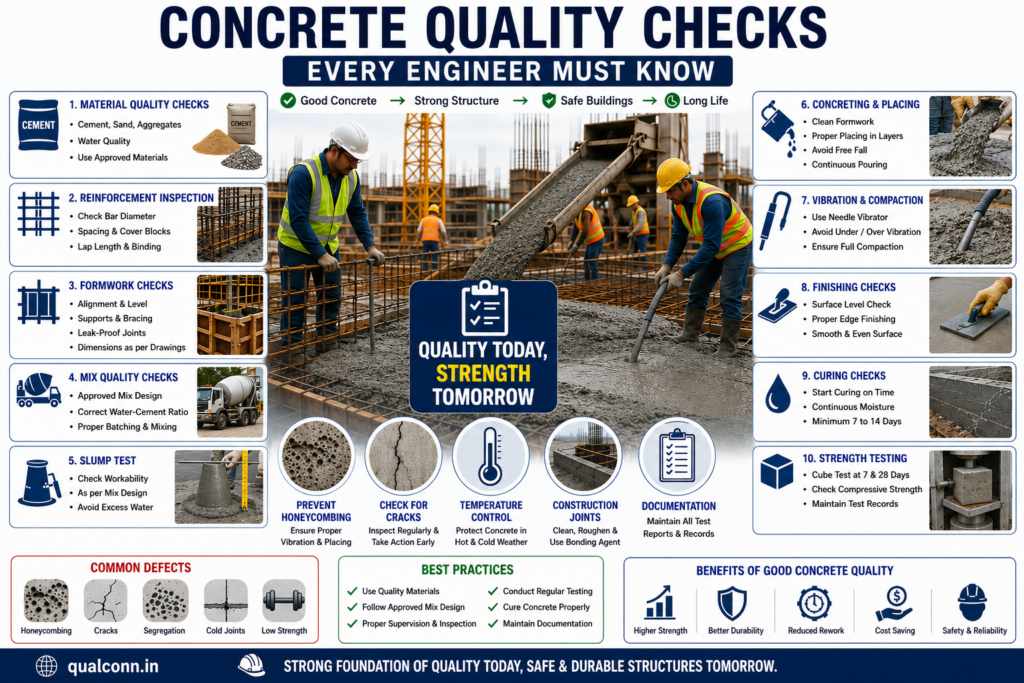
Why Concrete Quality Control Matters
Concrete quality control is essential for every construction project. Good concrete improves durability and ensures the structure performs well for many years.
Proper quality control helps:
- Improve structural strength
- Reduce maintenance costs
- Prevent cracks and defects
- Increase durability
- Improve construction safety
In addition, proper inspection reduces rework and improves client satisfaction.
1. Material Quality Checks Before Concreting
Concrete quality starts with good materials. Even a perfect mix design cannot produce strong concrete if poor materials are used.
Cement Quality Checks
Cement plays a major role in concrete strength. Therefore, engineers must inspect cement carefully before use.
Important Checks
- Check cement grade
- Verify manufacturing date
- Ensure bags are dry
- Confirm approved brand usage
- Store cement in covered areas
Common Problems
- Moisture-damaged cement
- Expired cement bags
- Improper storage conditions
Furthermore, cement should never be stored directly on the ground.
Sand Quality Checks
Sand affects concrete bonding and workability. Poor-quality sand can reduce concrete strength significantly.
Inspection Checklist
- Inspect grading of sand
- Check for silt content
- Ensure sand is clean
- Verify moisture condition
Common Defects
- Excessive silt
- Organic impurities
- Poor grading
As a result, concrete may lose strength and develop cracks.
Aggregate Quality Checks
Coarse aggregates provide strength and stability to concrete.
Important Inspections
- Verify aggregate size
- Inspect cleanliness
- Ensure proper shape
- Remove dust and impurities
Common Problems
- Flaky aggregates
- Mud contamination
- Uneven aggregate size
Therefore, aggregate inspection should never be ignored on site.
Water Quality Checks
Water quality also affects concrete performance.
Important Checks
- Use clean water
- Avoid salty water
- Ensure water is free from chemicals
Contaminated water can reduce concrete strength and durability.
2. Reinforcement Inspection Before Concreting
Reinforcement steel must be inspected before pouring concrete. Incorrect reinforcement placement can weaken the structure.
Reinforcement Quality Checks
- Verify bar diameter
- Check reinforcement spacing
- Inspect lap lengths
- Confirm cover block placement
- Ensure tight binding wire
In addition, reinforcement should be free from loose rust and mud.
Common Site Mistakes
- Incorrect spacing
- Improper concrete cover
- Loose steel binding
- Short lap lengths
These problems may reduce structural strength.
3. Form work Quality Checks
Form work controls the shape and alignment of concrete members. Poor shuttering can create major defects during concreting.
Important Checks
- Inspect alignment and level
- Ensure proper supports
- Check leak-proof joints
- Apply shuttering oil properly
- Verify dimensions as per drawings
Common Problems
- Bulging shuttering
- Leakage during pouring
- Misalignment of members
Consequently, poor form work can affect both appearance and structural quality.
4. Concrete Mix Quality Checks
The correct mix ratio is important for achieving required strength.
Inspection Checklist
- Confirm approved mix design
- Maintain correct water-cement ratio
- Use proper batching methods
- Inspect mixing time
Common Problems
- Excess water addition
- Incorrect batching
- Poor mixing
Too much water reduces concrete strength significantly. Therefore, site engineers must control the water-cement ratio carefully.
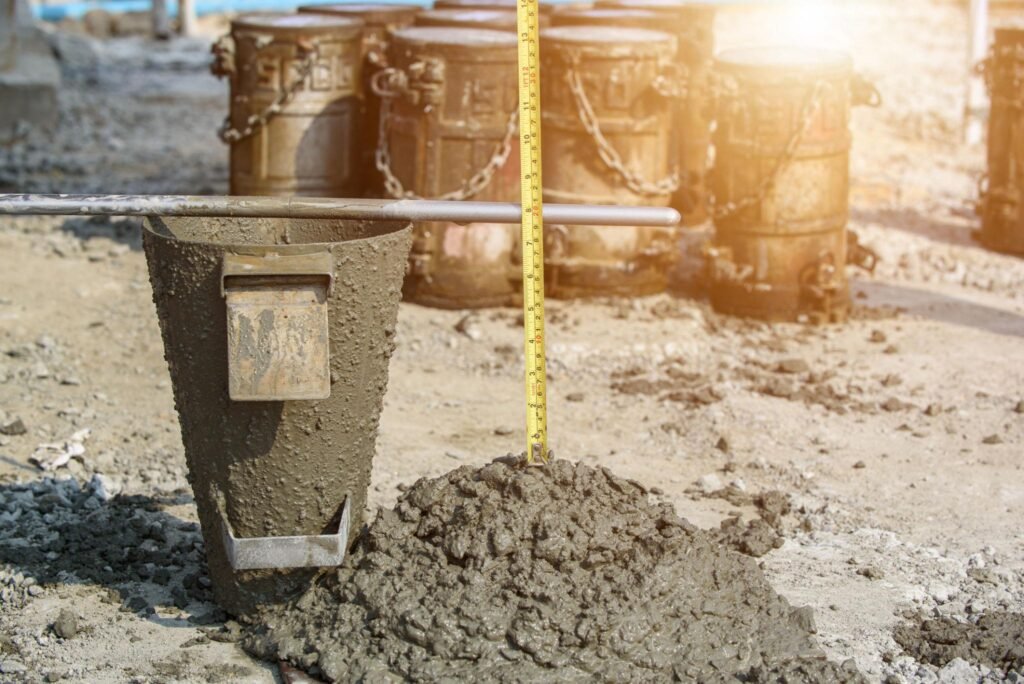
5. Slump Test Quality Check
The slump test measures concrete workability. It helps engineers identify consistency problems before concrete placement.
Why Slump Test is Important
- Measures workability
- Detects excess water
- Improves placement quality
Slump Test Procedure
- Fill slump cone in layers
- Compact each layer properly
- Lift cone vertically
- Measure slump value
Common Slump Problems
- Low slump causes poor workability
- High slump indicates excess water
As a result, the slump test is one of the most important field tests in concreting.
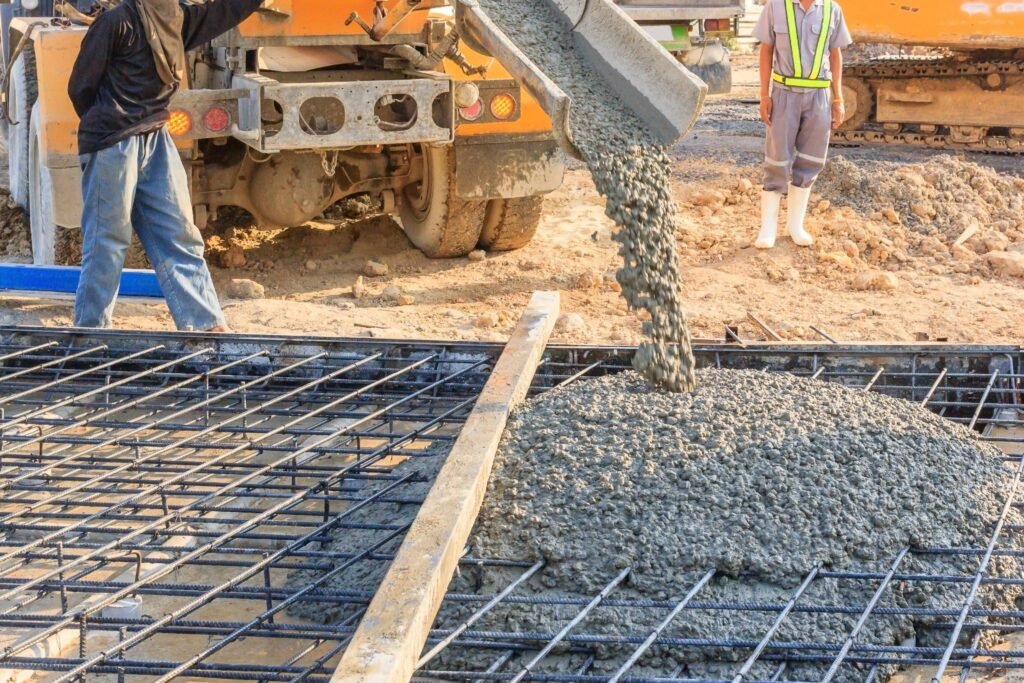
6. Concrete Pouring Quality Checks
Concrete placement must follow proper procedures. Otherwise, segregation and weak zones may develop.
Before Pouring
- Clean form work properly
- Remove debris and water
- Verify reinforcement approval
During Pouring
- Place concrete in layers
- Maintain proper pouring sequence
- Avoid excessive free fall
- Ensure continuous concreting
Common Problems
- Segregation
- Cold joints
- Delayed pouring
Therefore, engineers should monitor concreting activities continuously.
7. Vibration and Compaction Checks
Compaction removes air voids from concrete. Proper vibration improves concrete density and strength.
Important Checks
- Use approved vibrators
- Avoid under vibration
- Prevent over vibration
- Ensure complete compaction
Common Defects
- Honeycombing
- Air pockets
- Weak concrete zones
In many projects, poor vibration becomes the main reason for honeycombing.
8. Concrete Finishing Checks
Concrete finishing improves appearance and durability.
Inspection Checklist
- Check surface level
- Inspect edge finishing
- Verify slope where required
- Ensure smooth surface finish
Poor finishing may lead to uneven surfaces and water stagnation.
9. Curing Quality Checks
Curing is one of the most important steps after concreting. However, many projects fail to maintain proper curing practices.
Why Curing is Important
Proper curing:
- Improves strength
- Reduces cracks
- Increases durability
- Prevents surface drying
Important Checks
- Start curing on time
- Maintain continuous moisture
- Continue curing for required duration
Recommended Curing Duration
- OPC concrete → minimum 7 days
- Blended cement concrete → minimum 10–14 days
Without proper curing, concrete may lose strength quickly.
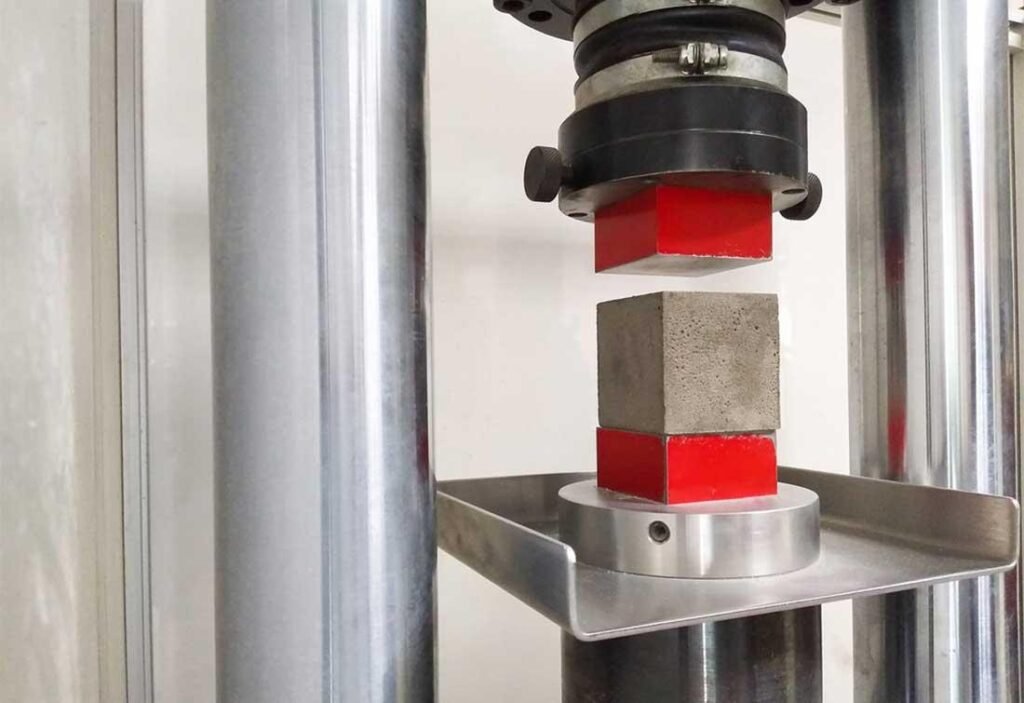
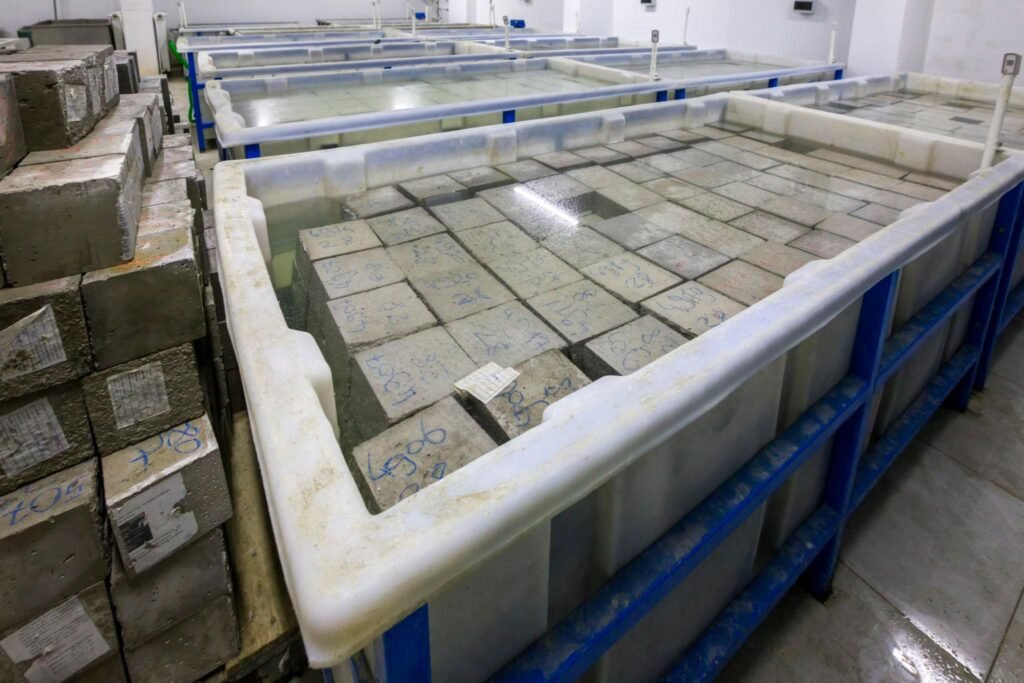
10. Concrete Cube Test
Cube testing checks compressive strength of concrete.
Purpose of Cube Test
- Verify strength achievement
- Detect poor-quality concrete
- Ensure design compliance
Cube Test Procedure
- Prepare concrete cubes
- Cure cubes properly
- Test at 7 days and 28 days
Engineers should maintain proper cube testing records for quality documentation.
11. Honeycombing Inspection
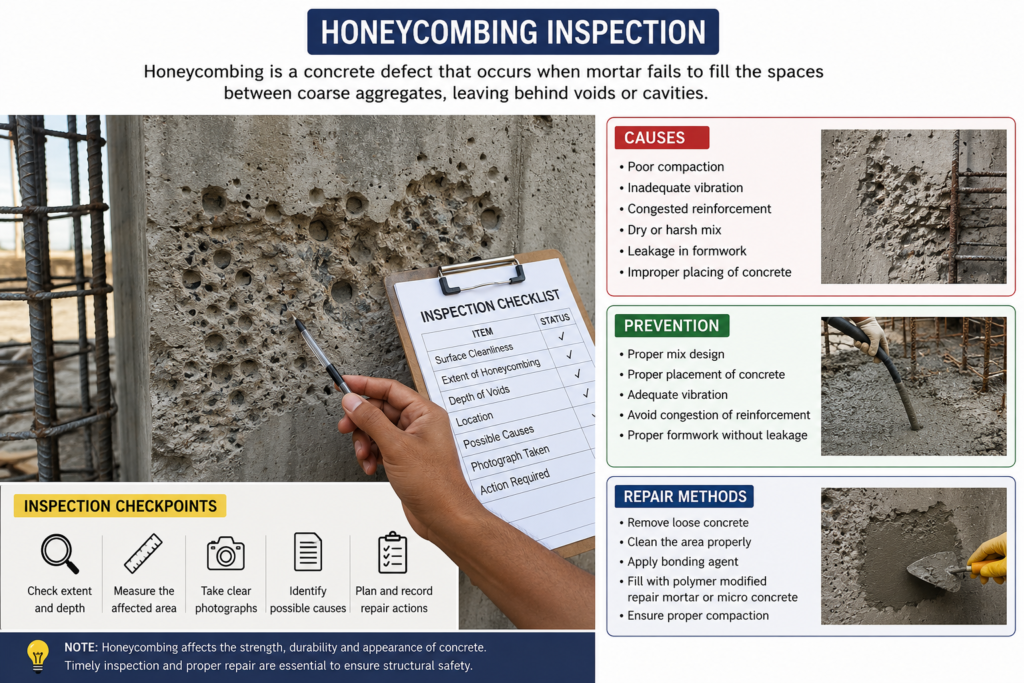
Honeycombing is a common concrete defect. It creates voids inside structural members.
Causes of Honeycombing
- Poor vibration
- Congested reinforcement
- Leakage in form work
- Improper concrete placement
Prevention Methods
- Ensure proper compaction
- Use leak-proof form work
- Place concrete carefully
If honeycombing becomes severe, structural repair may be required.
12. Crack Inspection in Concrete
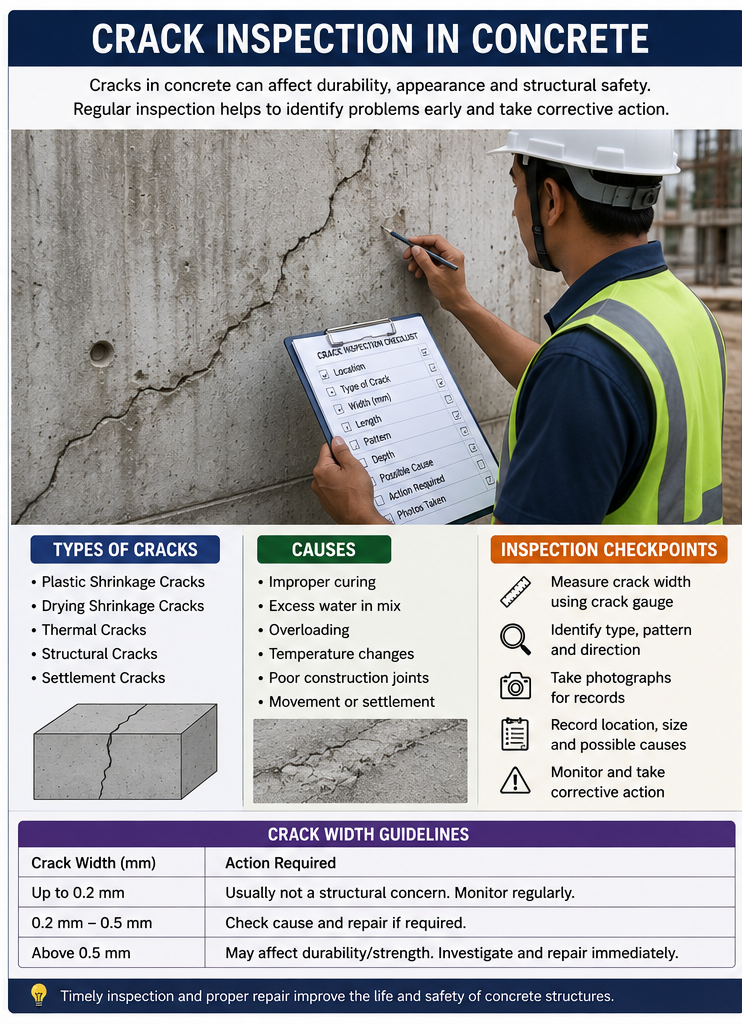
Concrete cracks are common on construction sites. Some cracks are minor, while others may affect structural safety.
Common Causes
- Improper curing
- Plastic shrinkage
- Thermal movement
- Overloading
Inspection Checks
- Measure crack width
- Observe crack pattern
- Monitor structural cracks carefully
Moreover, engineers should investigate large cracks immediately.
13. Temperature Control During Concreting
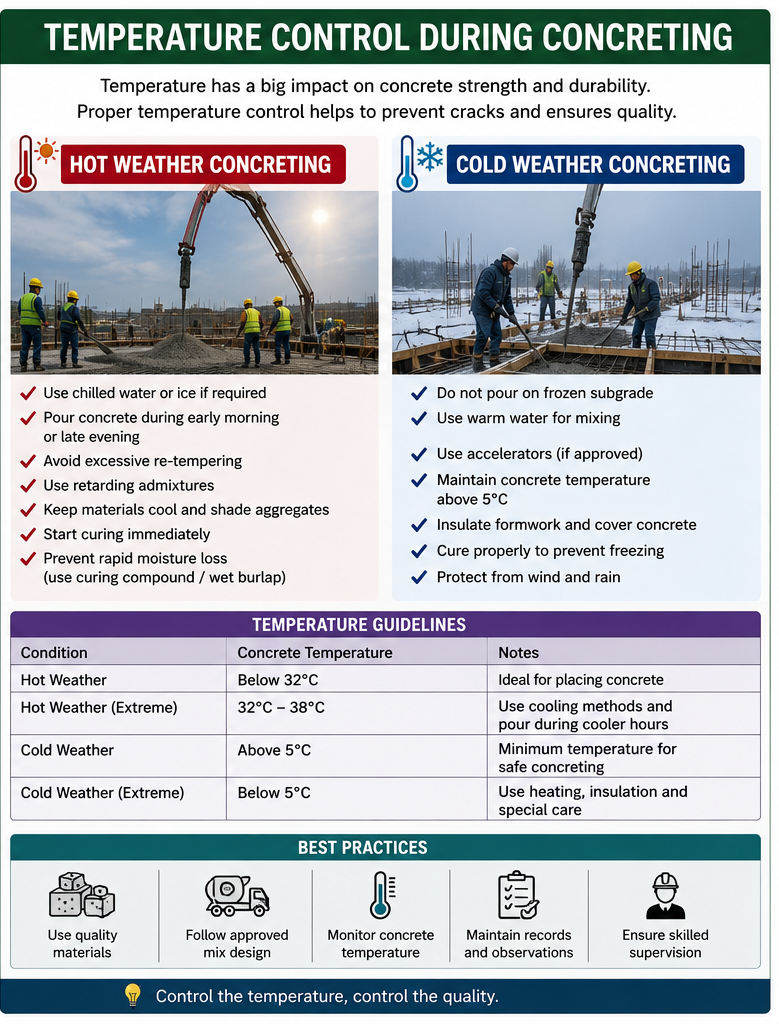
Weather conditions affect concrete quality significantly.
Hot Weather Checks
- Avoid excess water addition
- Protect concrete from rapid drying
- Use chilled water if necessary
Cold Weather Checks
- Prevent freezing
- Maintain proper temperature
Extreme temperatures can reduce concrete performance.
14. Construction Joint Inspection
Construction joints require careful treatment.
Important Checks
- Clean joint surfaces properly
- Remove laitance
- Roughen the surface
- Apply bonding material where required
Poor construction joints may create weak zones in structural members.
15. QA/QC Documentation Checks
Documentation is an important part of concrete quality control.
Important Records
- Slump test reports
- Cube test reports
- Material approvals
- Inspection checklists
- Pour cards
Proper records help maintain project quality standards.
Common Concrete Defects Found on Site
Several concrete defects appear due to poor workmanship or lack of supervision.
Frequently Observed Defects
- Honeycombing
- Surface cracks
- Segregation
- Cold joints
- Uneven concrete surface
- Low-strength concrete
Therefore, regular inspection is essential during all concreting activities.
Best Practices for Concrete Quality Control
Follow Approved Mix Design
Always use the approved concrete mix.
Conduct Regular Testing
Perform slump tests and cube tests regularly.
Maintain Proper Supervision
Experienced engineers should monitor site activities.
Ensure Continuous Curing
Good curing improves long-term durability.
Use Quality Materials
Approved materials improve concrete performance.
In addition, proper planning reduces construction defects significantly.
Future Trends in Concrete Quality Management
Modern construction projects are adopting advanced quality technologies.
Emerging Trends
- AI-based quality monitoring
- Smart concrete sensors
- Automated batching systems
- Drone-based inspection
- Digital QA/QC systems
These technologies improve construction accuracy and reduce human error.
Final Thoughts
Concrete quality plays a major role in structural safety and durability. Small mistakes during mixing, pouring, vibration, or curing can create serious problems later.
Therefore, every engineer must understand proper concrete quality checks and inspection procedures.
Strong concrete quality control helps:
✔ Improve safety
✔ Increase durability
✔ Reduce maintenance costs
✔ Prevent structural defects
In modern construction, quality concrete is not just about strength. It is about building safe and long-lasting structures for the future.
Frequently Asked Questions (FAQs)
1. What are concrete quality checks?
Concrete quality checks are inspections and tests performed before, during, and after concreting to ensure proper strength and durability.
2. Why is the slump test important?
The slump test measures workability and helps identify excess water or poor consistency in concrete.
3. What causes honeycombing in concrete?
Honeycombing occurs due to poor vibration, improper compaction, congested reinforcement, or leaking form work.
4. Why is curing important in concrete?
Curing helps concrete gain strength, prevents cracks, and improves durability.
5. What is the purpose of the cube test?
Cube testing verifies the compressive strength of concrete and checks whether the required design strength is achieved.


Pingback: Reinforcement Quality Checks Every Engineer Must Know - Your Trusted Hub For Construction Quality