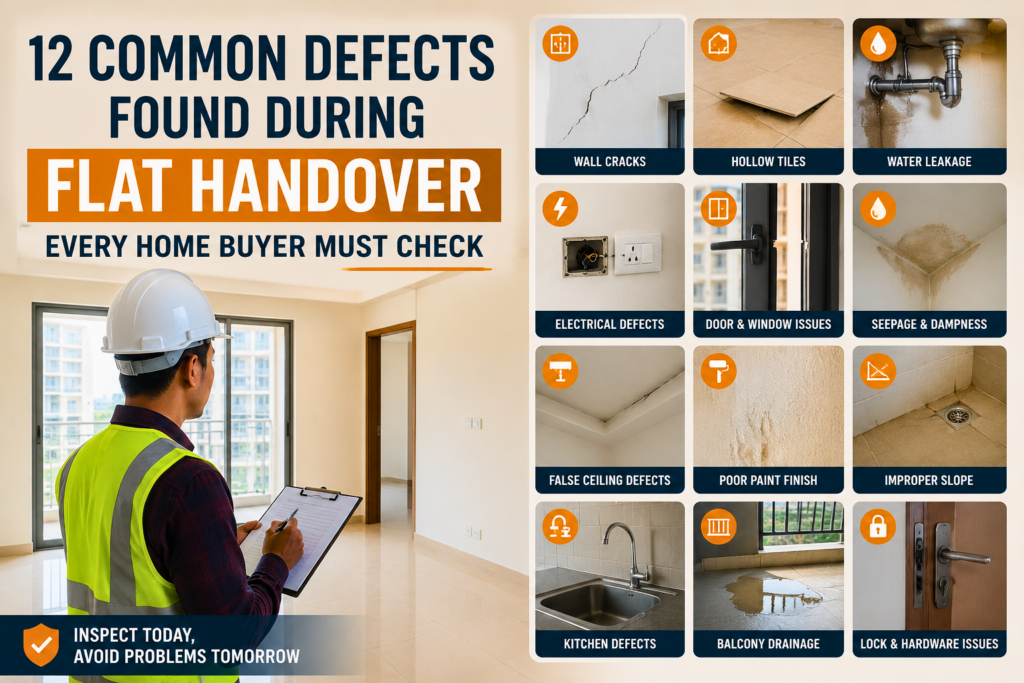
Modern buildings are no longer just about concrete, steel, and brickwork. Today’s structures depend heavily on MEP systems — Mechanical, Electrical, and Plumbing services — to ensure safety, comfort, functionality, and efficiency.
Even if a building has excellent structural quality, poor MEP execution can lead to water leakage, electrical hazards, HVAC failures, fire risks, high maintenance costs, and customer dissatisfaction. This is why MEP quality control has become one of the most critical responsibilities on construction projects.
From residential apartments and hospitals to commercial towers and industrial plants, MEP systems form the operational backbone of every modern building.
For site engineers, QA/QC engineers, consultants, and project managers, understanding MEP quality checks is essential to avoid rework and ensure long-term building performance.
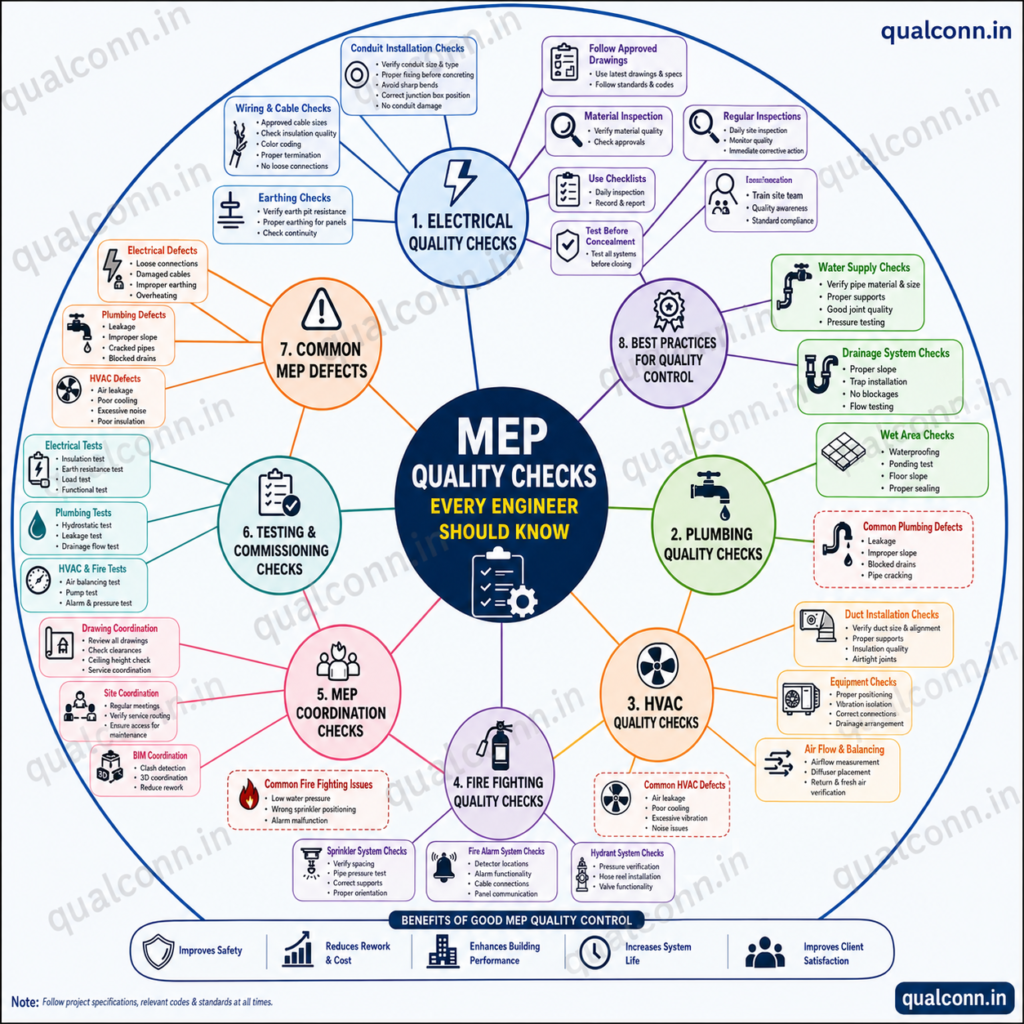
In this detailed guide, we will explore the most important MEP quality checks every engineer should know during construction.
Understanding MEP in Construction
MEP stands for:
- Mechanical Systems – HVAC, ventilation, air conditioning
- Electrical Systems – wiring, conduits, panels, lighting, earthing
- Plumbing Systems – water supply, drainage, sewage
- Fire Fighting Systems – sprinklers, hydrants, alarms
MEP works are highly interconnected. Poor coordination between systems often causes clashes, delays, and expensive corrections during execution.
That is why proper inspection and quality control procedures are essential at every stage.
Importance of MEP Quality Checks
MEP quality inspection is not just about following drawings. It directly impacts:
1. Safety
Faulty electrical systems or fire fighting installations can create major hazards.
2. Building Performance
Poor HVAC systems affect occupant comfort and energy efficiency.
3. Maintenance Costs
Improper plumbing or drainage can result in continuous repair expenses.
4. Project Delays
MEP rework is one of the biggest causes of construction delays.
5. Client Satisfaction
Leakages, electrical failures, and poor cooling systems lead to customer complaints after handover.
Electrical Quality Checks Every Engineer Must Know
Electrical systems are among the most sensitive components in a building. Even minor installation mistakes can lead to electrical failure, fire accidents, or equipment damage.
Conduit Installation Checks
Before slab casting or wall plastering, conduits must be inspected properly.
Important Checks
- Verify conduit size and type as per approved drawings
- Ensure conduits are fixed firmly
- Avoid excessive conduit bends
- Check proper junction box positioning
- Ensure conduits are not damaged during shuttering work
- Verify conduits are free from blockages
Common Site Problems
- Crushed conduits during concreting
- Improper routing
- Loose fixing causing displacement
- Missing conduit sleeves
Cable and Wiring Quality Checks
Cable installation must comply with project specifications and safety standards.
Inspection Checklist
- Verify approved cable sizes
- Check insulation condition
- Ensure proper cable color coding
- Inspect cable tray supports
- Confirm tight terminal connections
- Avoid cable jointing without approval
Testing Procedures
- Insulation resistance test
- Continuity test
- Earth continuity verification
Common Defects
- Loose connections
- Damaged insulation
- Overloaded circuits
- Poor cable management
Earthing and Grounding Checks
Proper grounding protects electrical systems and occupants from electrical shock.
Quality Checks
- Verify earth pit resistance values
- Check proper grounding connections
- Inspect earthing strip continuity
- Confirm bonding of panels and equipment
Common Issues
- High earth resistance
- Corrosion in grounding strips
- Loose earthing connections
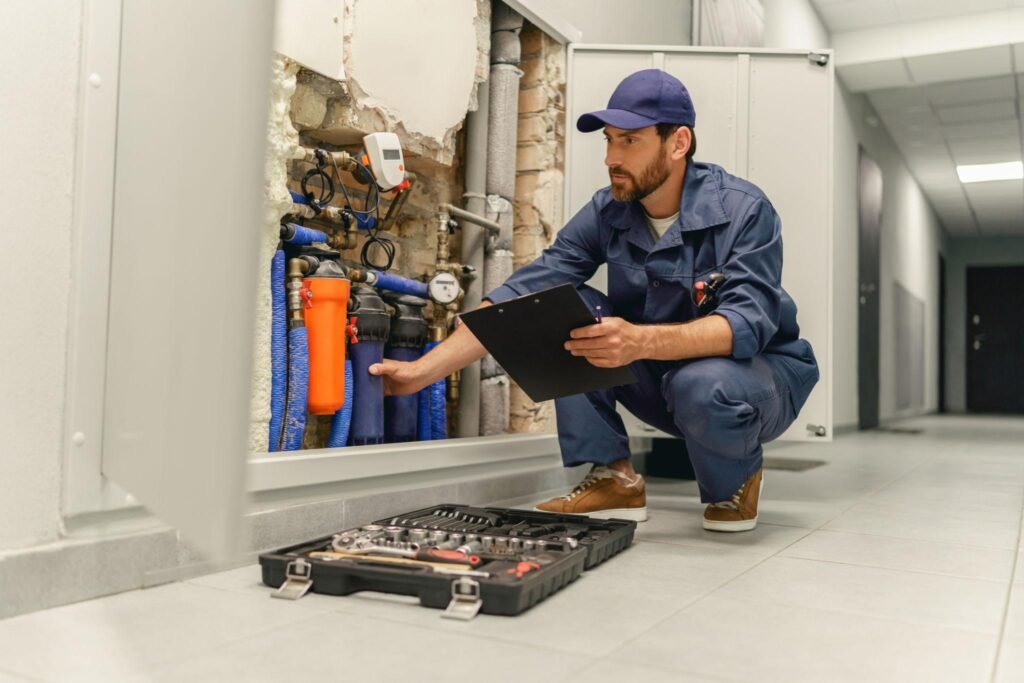
Plumbing Quality Checks Every Engineer Should Know
Plumbing systems are responsible for water supply, drainage, and sanitation. Plumbing defects are among the most common complaints after project handover.
Water Supply Pipe Inspection
Important Checks
- Verify pipe material and specification
- Check pipe diameter as per drawings
- Ensure proper support spacing
- Inspect joint quality
- Verify pressure ratings
Pressure Testing
Pressure testing is mandatory before concealment.
Common Problems
- Pipe leakage
- Weak joints
- Improper valve installation
Drainage System Quality Checks
Drainage systems require proper slope and alignment for smooth flow.
Inspection Checklist
- Verify pipe slope toward drainage
- Check proper trap installation
- Ensure no reverse slope
- Inspect clean out accessibility
- Conduct water flow testing
Common Defects
- Water stagnation
- Drain blockage
- Bad odor due to improper traps
Toilet and Wet Area Checks
Bathrooms are high-risk areas for leakage complaints.
Quality Checks
- Verify waterproofing before tile work
- Conduct ponding tests
- Inspect floor slope toward drain
- Ensure proper sealing around pipe sleeves
Common Issues
- Leakage into lower floors
- Water stagnation
- Improper floor levels
HVAC Quality Checks Every Engineer Must Know
HVAC systems provide thermal comfort and ventilation inside buildings. Poor HVAC quality affects occupant comfort and operational efficiency.
Duct Installation Checks
Important Inspections
- Verify duct dimensions
- Ensure proper supports and hangers
- Check insulation thickness
- Inspect air-tight duct joints
- Confirm alignment and level
Common Defects
- Air leakage
- Poor support spacing
- Damaged insulation
HVAC Equipment Installation Checks
Inspection Checklist
- Verify equipment positioning
- Check vibration isolation pads
- Inspect electrical connections
- Confirm proper drainage connections
Common Problems
- Excessive vibration
- Improper cooling
- Equipment noise
Air Flow and Balancing Checks
Proper airflow balancing ensures efficient cooling and ventilation.
Important Checks
- Measure airflow rates
- Verify Diffusers placement
- Inspect return air systems
- Check fresh air supply
Fire Fighting System Quality Checks
Fire protection systems are essential for life safety and code compliance.
Sprinkler System Inspection
Quality Checks
- Verify sprinkler spacing
- Check sprinkler head orientation
- Ensure pipe pressure testing
- Inspect support brackets
Common Problems
- Incorrect spacing
- Insufficient pressure
- Pipe leakage
Fire Alarm System Checks
Inspection Checklist
- Verify detector locations
- Test alarm functionality
- Inspect cable connections
- Confirm panel communication
Hydrant System Checks
Important Inspections
- Verify hydrant pressure
- Check hose reel installation
- Ensure valve functionality
MEP Coordination Checks
One of the biggest challenges in construction is MEP coordination.
Without proper coordination:
- Ducts may clash with beams
- Pipes may interfere with cable trays
- Ceiling space may become congested
This results in:
- Delays
- Rework
- Increased costs
Important Coordination Checks
Drawing Coordination
- Compare structural, architectural, and MEP drawings
- Verify ceiling heights
- Check service clearances
Site Coordination
- Conduct regular coordination meetings
- Inspect service routing before installation
- Maintain proper access for maintenance
BIM Coordination
Modern projects increasingly use BIM for clash detection and coordination.
Benefits include:
- Reduced rework
- Faster installation
- Better planning accuracy
Waterproofing Quality Checks in MEP Areas
MEP penetrations are common leakage points.
Important Checks
- Proper sealing around sleeves
- Waterproofing around floor drains
- Pipe penetration treatment
- Joint sealing inspection
Common Leakage Areas
- Toilets
- Terraces
- Basements
- Utility shafts
Testing and Commissioning Checks
Testing and commissioning ensure all systems function correctly before handover.
Electrical Testing
Essential Tests
- Insulation resistance test
- Earth resistance test
- Load testing
- Functional testing
Plumbing Testing
Important Tests
- Hydro static pressure test
- Leak testing
- Drainage flow testing
HVAC Testing
Commissioning Checks
- Air balancing
- Temperature testing
- Noise level inspection
Fire Fighting Testing
Essential Tests
- Pump testing
- Sprinkler pressure testing
- Alarm testing
Common MEP Mistakes Found on Construction Sites
Many construction defects occur due to poor supervision or rushed execution.
Frequently Observed Problems
- Incorrect pipe slopes
- Loose electrical connections
- Improper duct support
- Missing insulation
- Poor waterproofing around penetrations
- Incomplete testing before concealment
These issues can become major problems after project handover.
Best Practices for MEP Quality Control
1. Follow Approved Drawings
Always execute work according to latest approved drawings and specifications.
2. Conduct Material Inspection
Ensure all materials are approved before installation.
3. Use Inspection Checklists
Maintain daily inspection records for accountability.
4. Perform Testing Before Concealment
Never close ceilings or walls before testing systems.
5. Improve Coordination
Regular coordination meetings reduce clashes and rework.
6. Train Site Teams
Workers and supervisors should understand quality standards.Role of QA/QC Engineers in MEP Works
QA/QC engineers play a major role in ensuring quality execution.
Their Responsibilities Include
- Material inspection
- Site quality inspection
- Documentation and reporting
- Witnessing testing procedures
- Ensuring compliance with standards
Proper QA/QC practices significantly reduce future maintenance issues.
Future of MEP Quality Management
The construction industry is rapidly adopting digital technologies for better quality control.
Emerging Trends
- BIM-based coordination
- Digital inspection checklists
- AI-powered defect detection
- Smart building monitoring systems
- IoT-enabled MEP systems
These technologies are improving project efficiency and reducing human error.
Final Thoughts
MEP systems are one of the most critical parts of modern construction projects. Even minor installation mistakes can lead to costly repairs, operational failures, safety hazards, and customer dissatisfaction.
That is why every engineer must understand proper MEP quality inspection procedures, coordination methods, testing standards, and QA/QC practices.
Strong MEP quality control not only improves project performance but also increases building safety, durability, and long-term reliability.
In today’s construction industry, quality is not just about completing work — it is about delivering smarter, safer, and more efficient buildings for the future.
Frequently Asked Questions (FAQs)
1. What are MEP systems in construction?
MEP stands for Mechanical, Electrical, and Plumbing systems used in buildings for ventilation, power supply, water supply, drainage, fire fighting, and overall building functionality.
2. Why are MEP quality checks important?
MEP quality checks help prevent leakages, electrical failures, HVAC problems, fire hazards, and costly rework while improving safety and building performance.
3. What are the main electrical quality checks on site?
Key electrical inspections include:
- Conduit alignment
- Cable insulation testing
- Earthing verification
- Panel installation checks
- Proper cable termination
4. How is plumbing quality checked in construction?
Plumbing quality is checked through:
- Pipe alignment inspection
- Pressure testing
- Drainage slope verification
- Leakage testing
- Joint inspection
5. What is the purpose of HVAC quality inspection?
HVAC quality checks ensure proper cooling, ventilation, airflow balancing, energy efficiency, and occupant comfort inside buildings.
6. What is MEP coordination in construction?
MEP coordination involves proper planning and routing of mechanical, electrical, and plumbing services to avoid clashes and reduce rework during construction.
7. Which tests are important before MEP handover?
Important testing and commissioning checks include:
- Insulation resistance test
- Hydro pressure test
- Air balancing test
- Fire alarm testing
- Pump testing
8. What are common MEP defects found on construction sites?
Common MEP defects include:
- Pipe leakage
- Improper drainage slope
- Loose electrical connections
- Air leakage in ducts
- Poor waterproofing around penetrations
9. How does BIM help in MEP quality control?
Building Information Modeling (BIM) helps detect clashes between services, improves coordination, reduces rework, and enhances installation accuracy.
10. What is the role of a QA/QC engineer in MEP works?
QA/QC engineers inspect materials, monitor installation quality, conduct testing, maintain documentation, and ensure compliance with project specifications and standards.