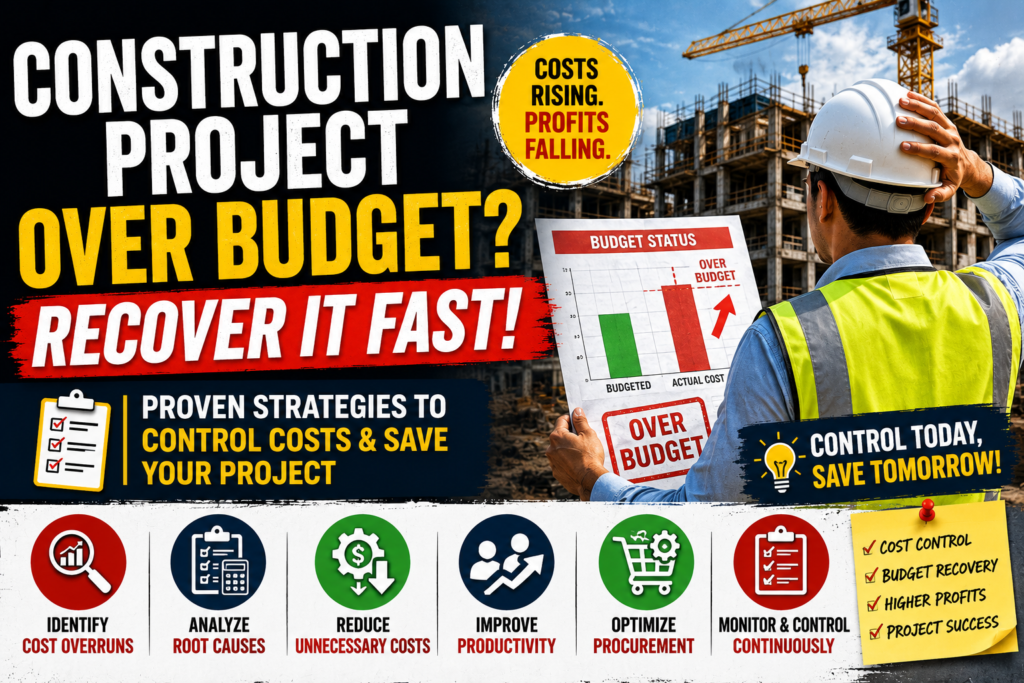
Construction cost overruns are among the biggest challenges faced by project managers, contractors, developers, and project owners. A project that starts with a well-planned budget can quickly exceed its financial targets due to material price increases, design changes, inaccurate estimates, poor planning, delays, rework, or unforeseen site conditions.
According to industry reports, cost overruns affect a significant percentage of construction projects worldwide, impacting profitability, client relationships, project delivery, and business reputation. While going over budget is a serious issue, it does not necessarily mean the project will fail. The key is identifying the causes early and implementing a structured cost recovery plan.
This guide explains why construction projects exceed their budgets, how to identify the root causes, and the practical steps project managers can take to bring costs back under control.
Why Do Construction Projects Go Over Budget?
Construction projects rarely exceed their budgets because of a single issue. In most cases, cost overruns are the result of multiple factors occurring simultaneously.
Common causes include:
- Poor cost estimation during tendering
- Scope creep and client changes
- Design revisions
- Material price escalation
- Low labor productivity
- Construction delays
- Rework due to quality issues
- Poor procurement planning
- Equipment breakdowns
- Weather-related disruptions
- Contract disputes
- Cash flow problems
- Inadequate project monitoring
- Waste of materials
- Weak subcontractor performance
Understanding which of these factors is affecting your project is the first step toward controlling costs.
Step 1: Determine How Far Over Budget the Project Is
Before making any decisions, measure the financial impact accurately.
Review:
- Original approved budget
- Current project expenditure
- Remaining work value
- Earned Value (EV)
- Actual Cost (AC)
- Cost Variance (CV)
- Cost Performance Index (CPI)
- Forecast at Completion (EAC)
Questions to ask:
- How much money has been overspent?
- Which work packages exceeded their budgets?
- Which trades are responsible?
- Is the overrun temporary or permanent?
Without reliable cost data, recovery efforts become guesswork.
Step 2: Identify the Root Cause of Cost Overruns
Treat budget overruns like any other project issue by conducting a root cause analysis.
Possible questions include:
- Was the BOQ accurate?
- Were drawings complete during tendering?
- Were quantities underestimated?
- Did procurement occur too late?
- Were labor productivity targets unrealistic?
- Was excessive rework required?
- Were change orders properly approved?
- Were subcontractors performing as planned?
Tools such as the 5 Whys, Pareto Analysis, and Fish bone Diagrams can help uncover the underlying causes.
Step 3: Review the Project Scope
Scope creep is one of the leading reasons projects exceed their budgets.
Review whether:
- Additional work has been added.
- Client instructions increased quantities.
- Specifications changed.
- New statutory requirements were introduced.
- Extra finishes or upgraded materials were requested.
Any work outside the original contract should be properly documented and processed as a variation or change order.
Step 4: Analyze Cost Reports
A detailed cost analysis helps identify where money is being lost.
Review:
- Material costs
- Labor costs
- Equipment costs
- Plant utilization
- Subcontractor payments
- Site overheads
- Administrative expenses
- Temporary works
- Waste and scrap
Compare planned costs with actual costs for each activity.
Step 5: Reduce Material Waste
Material waste directly affects project profitability.
Common examples include:
- Concrete over-ordering
- Steel cutting waste
- Damaged cement bags
- Improper storage
- Tile breakage
- Excessive plaster consumption
- Rejected materials
To minimize waste:
- Improve inventory management.
- Store materials correctly.
- Monitor daily consumption.
- Train workers in material handling.
- Reuse materials where feasible.
Step 6: Improve Labor Productivity
Labor is often one of the largest project costs.
Low productivity can result from:
- Poor supervision
- Lack of planning
- Idle time
- Rework
- Insufficient training
- Material shortages
- Equipment downtime
Improve productivity by:
- Daily work planning
- Clear task assignments
- Adequate supervision
- Timely material availability
- Incentive-based performance where appropriate
Step 7: Strengthen Procurement Management
Procurement delays and poor purchasing decisions often increase project costs.
Best practices include:
- Bulk purchasing where economical
- Multiple vendor quotations
- Vendor performance evaluations
- Long-term supply agreements
- Early procurement of long-lead items
- Regular market price monitoring
A proactive procurement strategy can significantly reduce cost overruns.
Step 8: Control Change Orders
Changes are inevitable, but uncontrolled changes quickly inflate costs.
Every change should include:
- Description of the work
- Cost impact
- Schedule impact
- Client approval
- Revised drawings
- Supporting documentation
Never proceed with additional work without proper authorization unless contractually required.
Step 9: Eliminate Rework
Rework consumes labor, materials, equipment time, and management effort.
Common causes include:
- Poor workmanship
- Failed inspections
- Incorrect dimensions
- Drawing errors
- Lack of supervision
- Material defects
Strengthen QA/QC procedures to ensure work is completed correctly the first time.
Step 10: Optimize Equipment Utilization
Idle equipment increases costs without adding value.
Review:
- Crane utilization
- Excavator idle time
- Generator operating hours
- Equipment maintenance schedules
- Fuel consumption
- Rental duration’s
Return unused rented equipment as soon as possible to avoid unnecessary expenses.
Step 11: Improve Cash Flow Management
Cash flow problems often lead to indirect cost overruns.
Ensure:
- Timely client billing
- Prompt invoice submissions
- Follow-up on outstanding payments
- Accurate measurement records
- Efficient payment certification
Healthy cash flow reduces financing costs and keeps the project moving.
Step 12: Monitor Project Costs Weekly
Waiting until month-end to review costs is too late.
Track weekly:
- Planned cost vs. actual cost
- Labor productivity
- Material consumption
- Equipment utilization
- Procurement status
- Subcontractor progress
- Approved variations
Frequent monitoring allows corrective actions before costs escalate.
Step 13: Negotiate With Suppliers and Subcontractors
If the project is under financial pressure:
- Renegotiate payment terms.
- Seek bulk discounts.
- Explore alternative suppliers.
- Review subcontractor rates where contracts allow.
- Consolidate purchases.
Good supplier relationships often provide opportunities for cost savings.
Step 14: Use Digital Cost Management Tools
Modern software improves cost visibility and decision-making.
Useful tools include:
- Primavera P6
- Microsoft Project
- Microsoft Excel Cost Dashboards
- Power BI
- ERP Systems
- Quantity Surveying Software
- Construction Cost Control Dashboards
Digital reporting enables faster identification of budget risks.
Step 15: Prepare a Cost Recovery Plan
A structured recovery plan should include:
- Current financial status
- Cost overrun analysis
- Priority savings opportunities
- Resource optimization
- Procurement improvements
- Recovery timeline
- Responsible team members
- Weekly review meetings
Recovery should focus on improving efficiency rather than simply reducing spending.
Common Mistakes to Avoid
Avoid these common errors when managing an over-budget project:
- Ignoring early warning signs
- Delaying cost reporting
- Cutting quality to save money
- Reducing safety measures
- Proceeding with unauthorized changes
- Poor documentation
- Ineffective communication
- Weak procurement planning
- Failure to monitor productivity
Cost savings should never compromise project quality or worker safety.
Best Practices for Preventing Future Cost Overruns
Successful projects implement proactive cost control from day one.
Recommended practices include:
- Accurate quantity take-offs
- Detailed BOQs
- Comprehensive risk assessments
- Realistic budgeting
- Strong procurement planning
- Daily productivity tracking
- Weekly cost reviews
- Robust QA/QC systems
- Effective communication
- Continuous lessons learned
Construction Cost Control Checklist
Use this checklist to keep your project financially healthy:
- Budget reviewed regularly
- Weekly cost reports prepared
- Material waste monitored
- Labor productivity tracked
- Equipment utilization optimized
- Procurement status reviewed
- Change orders documented
- Rework minimized
- Cash flow monitored
- Risks updated
- Cost recovery actions implemented
- Client approvals recorded
Conclusion
Going over budget is one of the most stressful situations in construction, but it is not impossible to recover. The earlier you identify the problem, the greater your chances of restoring financial control without affecting project quality or delivery.
The most successful project managers treat cost control as an ongoing process rather than a monthly exercise. By analyzing cost data, controlling scope changes, improving productivity, reducing waste, strengthening procurement, and monitoring performance consistently, teams can significantly reduce financial risks and improve project profitability.
Ultimately, cost recovery is about making informed decisions based on reliable data. A disciplined approach to planning, execution, quality, and communication will not only help recover an over-budget project but also prevent similar issues on future projects.
Frequently Asked Questions (FAQs)
1. What causes a construction project to go over budget?
Common causes include inaccurate estimates, scope changes, material price increases, labor shortages, rework, delays, poor procurement planning, equipment breakdowns, and ineffective cost monitoring.
2. How can a project manager control construction costs?
A project manager should monitor project costs regularly, track productivity, manage procurement effectively, control change orders, reduce waste, prevent rework, and review cost reports weekly.
3. What is the biggest reason for cost overruns in construction?
Scope creep and poor planning are among the most common reasons. Uncontrolled design changes and inaccurate quantity estimates can significantly increase project costs.
4. How often should construction costs be reviewed?
Weekly cost reviews are recommended for active projects, with monthly financial summaries provided to stakeholders.
5. How does rework affect the project budget?
Rework increases labor costs, material consumption, equipment usage, and project overheads. Preventing quality defects is one of the most effective ways to control costs.
6. What tools help manage construction budgets?
Popular tools include Primavera P6, Microsoft Project, Power BI dashboards, ERP systems, Excel cost trackers, and quantity surveying software.
7. What is a cost recovery plan in construction?
A cost recovery plan is a structured strategy that identifies the causes of budget overruns, outlines corrective actions, assigns responsibilities, and tracks progress to bring the project back within financial targets.
8. Can a project still be successful if it goes over budget?
Yes. If the causes are identified early and corrective actions are implemented promptly, many over-budget projects can still achieve successful completion while minimizing financial impact.
📥 Download the Construction Cost Control Toolkit
Take control of your project finances with our Construction Cost Control Toolkit, created for Project Managers, Quantity Surveyors, Planning Engineers, Site Engineers, Contractors, and Developers.
What’s Included?
- ✅ Construction Cost Control Checklist
- ✅ Budget Tracking Dashboard (Excel)
- ✅ BOQ Cost Monitoring Template
- ✅ Material Consumption Tracker
- ✅ Labor Productivity Sheet
- ✅ Change Order Register
- ✅ Procurement Cost Tracker
- ✅ Cash Flow Monitoring Template
- ✅ Weekly Cost Review Format
- ✅ Cost Recovery Action Plan
- ✅ Printable PDF + Editable Excel Files